Massage Therapy for People with Osteoarthritis
/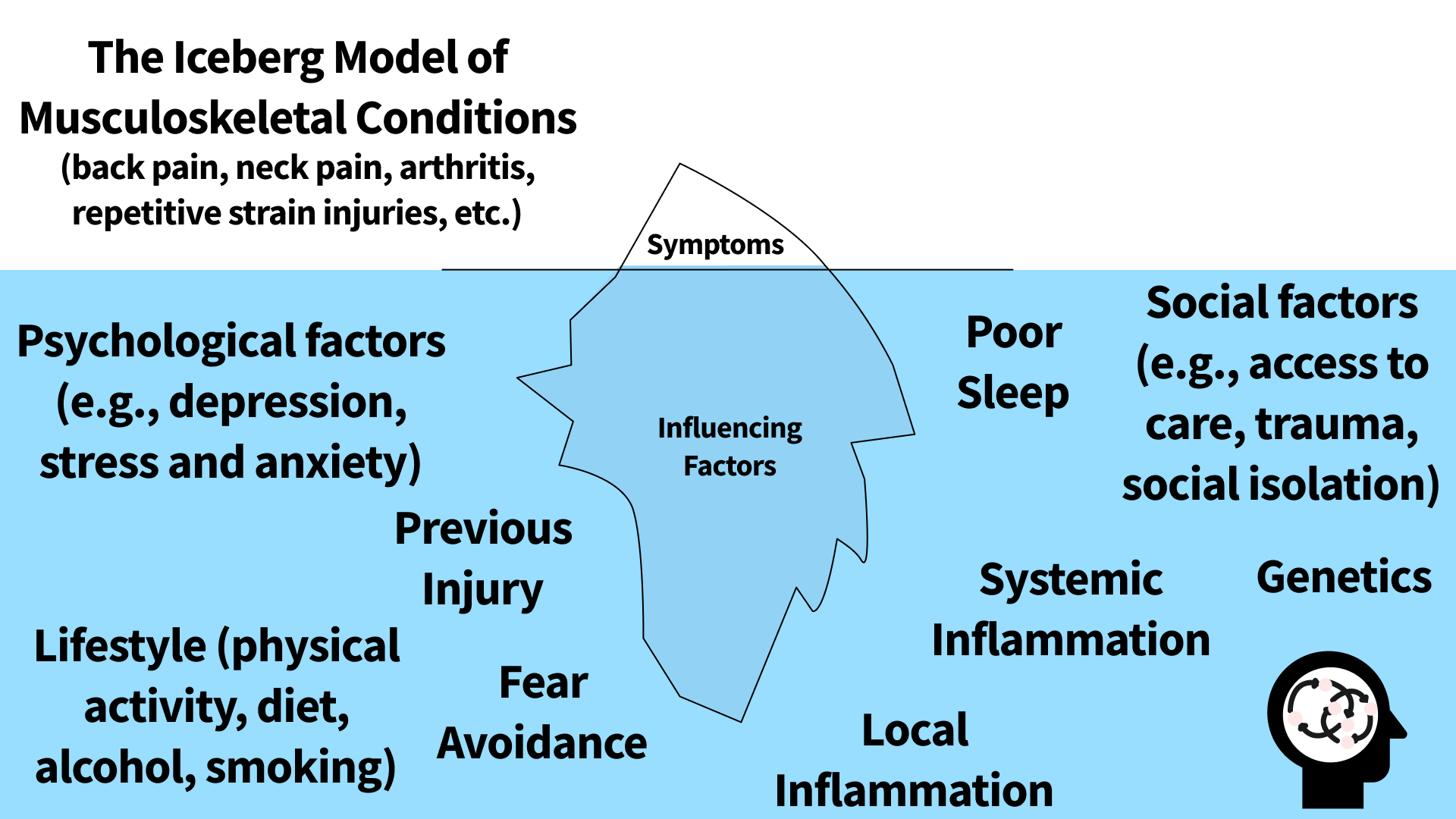
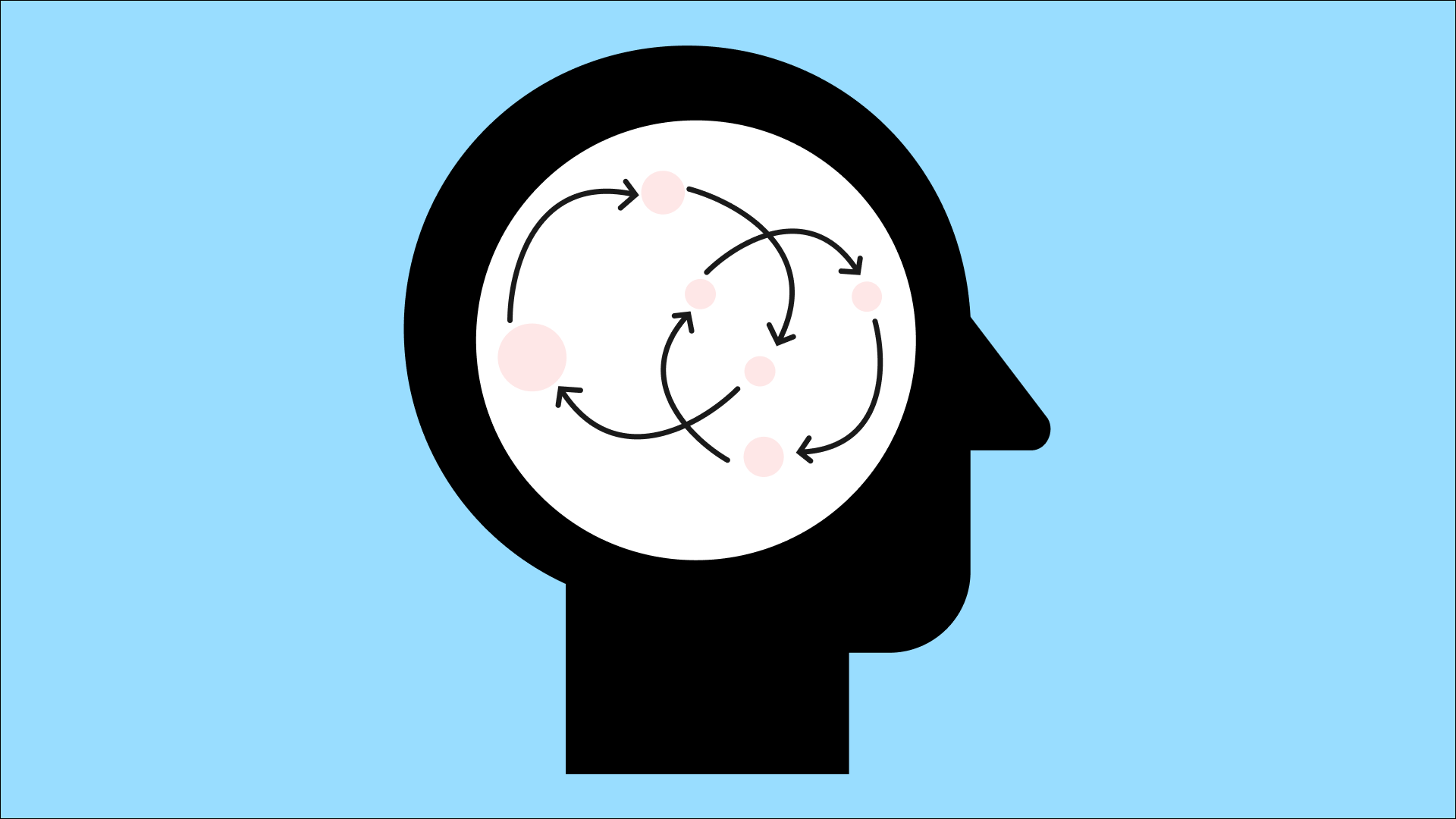
"Musculoskeletal conditions" is an umbrella term for issues affecting muscles, bones, joints, tendons, ligaments, and nerves. Rather than isolated injuries, these conditions should be conceptualized as complex networks of interacting symptoms—such as pain, stiffness, poor sleep, and decreased activity. The wide variance in clinical presentations underscores a multifaceted etiology involving genetic, metabolic, biomechanical, and environmental factors.
Massage Therapy for People with Osteoarthritis
Osteoarthritis affects over 500 million people globally, with women being more likely to suffer from the condition. It's characterized by joint pain and stiffness and commonly impacts the hands, knees, hips, and spine (Kolasinski et al., 2020; Long et al., 2022). Often we seek a quick fix for musculoskeletal conditions, but these conditions particularly in the case of osteoarthritis are influenced by a complex interplay of biological, psychological, social, and environmental factors (Döding et al., 2026). For this reason, an individualized approach is necessary. Clinical guidelines for musculoskeletal conditions consistently recommend several key strategies:
Person-Centered: Treatment plans should be customized for the individual and include education about their condition.
Psychosocial Factors: A person's mental and social well-being should be considered.
Physical Activity: Exercise and movement are important parts of the recovery process.
Manual Therapy: This can be a helpful addition to other treatments.
Medication: Short-term pain relief is an option, but potential risks should be weighed.
Non-Surgical Care: High-quality, non-surgical options should be explored before considering surgery.
Since there's no single cure, the most effective approach is a combination of these individualized management options, including physical activity, manual therapy, and lifestyle interventions. Essentially, the most effective approach is a combination of treatments tailored to the individual, rather than relying on a single method alone.
A Whole Person Approach to Massage Therapy: The Whole is More Than The Sum of its Parts
Within a whole person framework for massage therapy there are six components that make up a treatment plan (informed consent and shared decision making, assessment, outcome measurements, education and reassurance, multimodal treatment, ongoing re-evaluation).
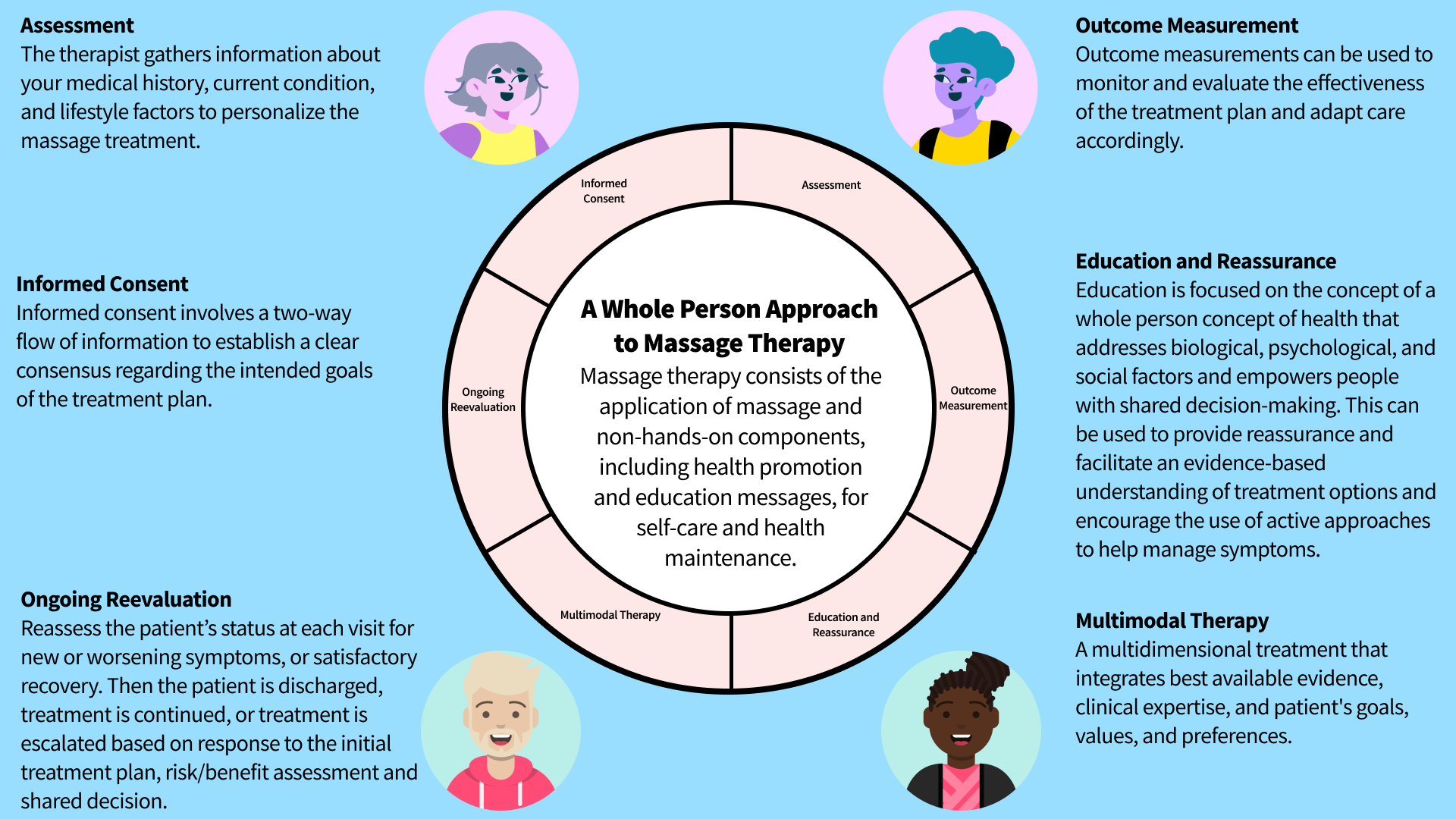
Six Pillars of a Massage Treatment Plan - Within an evidence-based framework for massage therapy there are six components that make up a treatment plan (informed consent and shared decision making, assessment, outcome measurements, education and reassurance, multimodal treatment, ongoing reevaluation).
Informed Consent and Shared Decision Making
Informed consent will include a discussion about natural history and the effects of no treatment, as well as the possible risks and benefits of receiving treatment. The therapist and patient will then work together to develop a plan of care based on the individualized goals and needs of the patient. This approach gives people the opportunity to be engaged in their own health through the process of shared decision making.
Assessment
A comprehensive assessment assists the clinician come up with a treatment plan that is best suited to each individual. It may involve a physical assessment and detailed health history intake to gather information about patients' limitations, course of pain and can help identify those with a higher likelihood of red flags (serious underlying pathologies) or yellow flags (prognosis factors for delayed recovery). This may also help establish therapeutic alliance and identify the biological, psychological, social and contextual factors contributing to pain and disability.
Red Flags (serious underlying pathologies) - Red flags are signs and symptoms that raise suspicion of serious underlying pathology, if a serious pathology is suspected a clinical decision should be made to refer the patient to an appropriate healthcare practitioner. For the general population there are several red flags to be mindful of such as, substantial motor/sensory loss or progressive neurological deficits, fractures or osteoporosis risk/fragility fracture, acute infection (fever/chills/malaise), joint dislocation, peripheral arterial disease and venous thromboembolism.
Yellow Flags (risk factors for delayed recovery) - This assessment process could also include screening questionnaires, such as the Orebro musculoskeletal pain questionnaire or Optimal Screening for Prediction of Referral and Outcome Yellow Flag (OSPRO-YF) to help identify yellow flags or identify patients at risk of poor prognosis. If the patient develops worsening physical or psychological symptoms consider a referral to counseling or an appropriate healthcare professional for further evaluation.
Physical Assessment - A physical assessment could include palpation, observing gait, neurological screening tests, assessing mobility and/or muscle strength. Interpret assessment results in the context of all assessment findings and implement an individualized treatment plan that is based on the assessment findings and goals of the individual.
Orthopedic Tests - Clinicians could also incorporate one or more of the following physical assessment tools and interpret assessment results in the context of all other assessment findings.
Neural Screening
Manual screening of joint movements
Palpation of musculoskeletal system
Outcome Measurement
Outcome measurements can be used to monitor and evaluate the effectiveness of the treatment plan and adapt care accordingly. This could include incorporating one or more of the following outcome measurements when assessing and monitoring patient progress:
Patient Global Impression Change
Pain Self Efficacy Scale
Self-Rated Recovery Question
Patient Specific Functional Scale
Brief Pain Inventory (BPI)
Numeric Pain Rating Scale (NPRS)
Visual Analogue Scale (VAS)
McGill Pain Questionnaire (MPQ) or The Revised Short McGill Pain Questionnaire Version-2
Multidimensional Pain Inventory
Short Musculoskeletal Function Assessment (SMFA)
Knee Injury and Osteoarthritis Outcome Score (KOOS)
Hip Disability and Osteoarthritis Outcome Score (HOOS)
Western Ontario and McMaster Universities Osteoarthritis Index (WOMAC)
Six Minute Walk Test
Education & Reassurance
Focus on the whole person concept of health that addresses biological, psychological, and social factors and empowers people with shared decision making. This can be used to provide reassurance and facilitate an evidence based understanding of treatment options and encourage the use of healthy coping strategies to help manage symptoms and mental well-being.
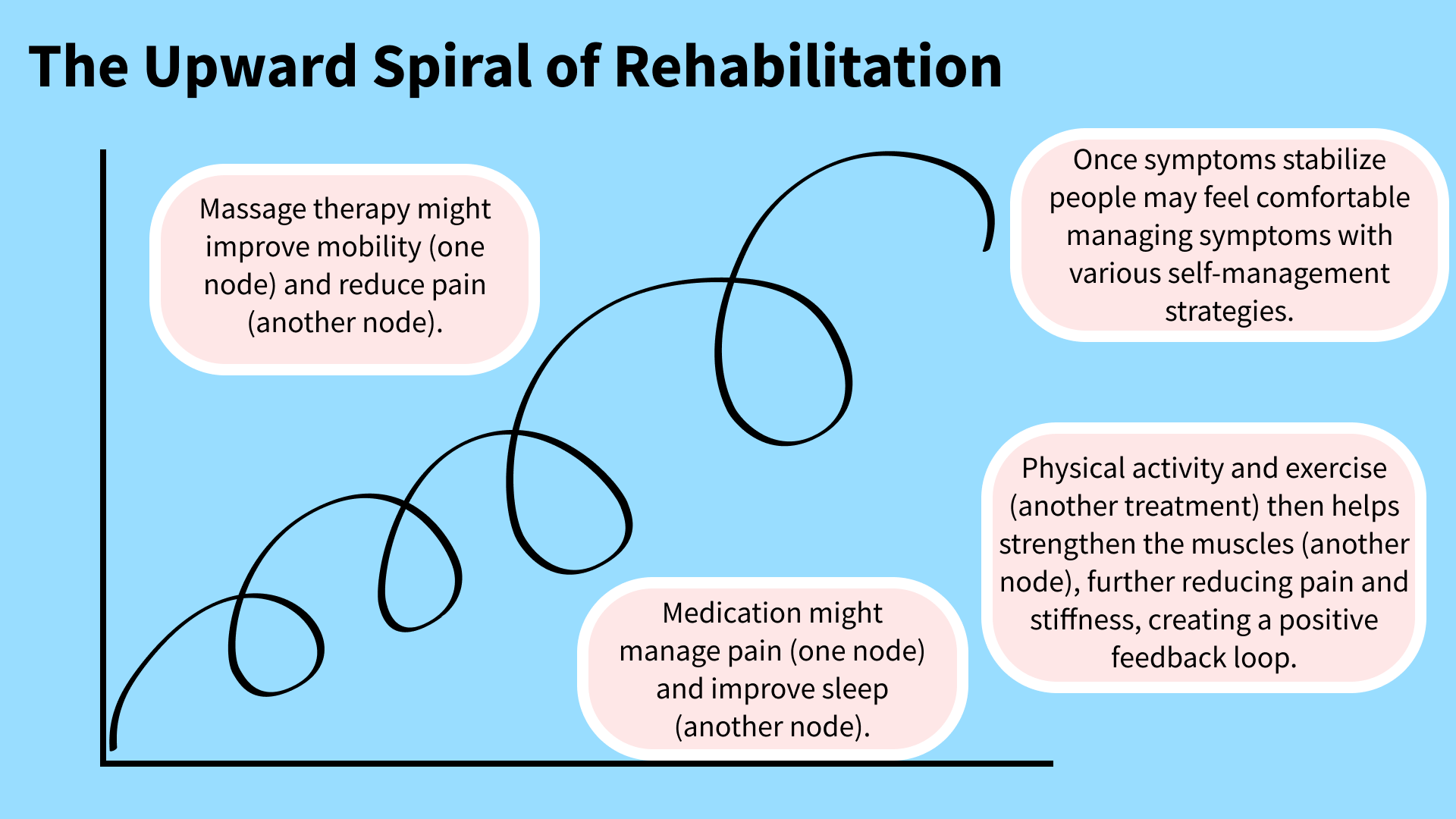
Example: Osteoarthritis can cause pain, stiffness, and decreased joint mobility. Medication might improve sleep (one node) and manage pain (another node). Massage therapy might improve mobility (one node) and reduce pain (another node). physical activity and exercise (another treatment) then helps strengthen the muscles (another node), further reducing pain and stiffness, creating a positive feedback loop. Once symptoms stabilize people may feel comfortable managing symptoms with various self-management strategies. All three treatments together contribute to an overall improvement in the symptom network.
Multimodal Treatment
To effectively address musculoskeletal health a personalized, multifaceted approach is key (e.g. self-management, education, exercise, and manual therapy). By integrating these various strategies, the overall effect is often greater than the sum of its individual parts. Rather than relying on a single treatment, the most successful strategies combine several components, including:
Manual Therapy - Massage can enhance health and well-being for individuals with a number of health-related conditions through the complex interplay of immunological, neurological, and psychological components (Keter et al., 2025; Packheiser et al., 2024). For people impacted by osteoarthritis massage therapy when used within a whole-person framework can be used to help manage.
Osteoarthritis of the Hand (Mi et al., 2023)
Osteoarthritis of the Knee (Zhu et al., 2024) - Randomized clinical trials have highlighted the effect of conservative treatment options for patients suffering from osteoarthritis related knee pain. In one randomized clinical trial published in the Journal of General Internal Medicine massage therapy was shown to improve function in patients who suffer from osteoarthritis related knee pain (Perlman et al., 2019). In addition, a randomized trial published in The New England journal of medicine demonstrated the benefits of a conservative multimodal approach (manual therapy + exercise) for patients with symptomatic osteoarthritis of the knee (Deyle et al., 2020).
Osteoarthritis of the Hip (Koc et al., 2025)
Osteoarthritis of the Spine (Bussières et al., 2021; Cashin et al., 2025)
Self-Management Strategies - Supported self-management empowers individuals to actively manage their health through ongoing support, guidance, encouragement and problem-solving skills (Kang et al., 2024). Massage therapists play a dual role: providing hands-on treatment and designing personalized self-management programs which may include.
Mindfulness-Based Interventions - There are a variety of mindfulness-based interventions that can help relieve pain and stress (e.g., walking, meditation, cognitive behavioral theory, yoga, tai chi, and qigong).
Passive Heating Exposure - Heat therapy (e.g., deep moist heat, heating pad, hot baths, sauna, or heated garments) can increase local blood flow, improve range of motion, and provide pain relief.
Healthy Sleep Habits - People with chronic pain can benefit from restorative sleep.
Exercise and Physical Activity - Exercise programs that are enjoyable and meaningful (e.g. muscle strengthening, joint mobility, proprioception and aerobic exercises) are a core treatment for people with osteoarthritis (Daste et al., 2021). Even modest volumes of exercise can benefit people with arthritis-related pain (Kraus et al., 2019). Meaning people with osteoarthritis should be encouraged to engage in physical activity, irrespective of duration.
Interdisciplinary Collaboration and Referrals - A multidisciplinary approach that supports healthy lifestyle factors, such as sleep, stress management, physical activity, and nutrition, can significantly benefit both physical and mental well-being. Massage therapists play a valuable role within this collaborative framework, working alongside medical and allied health professionals.
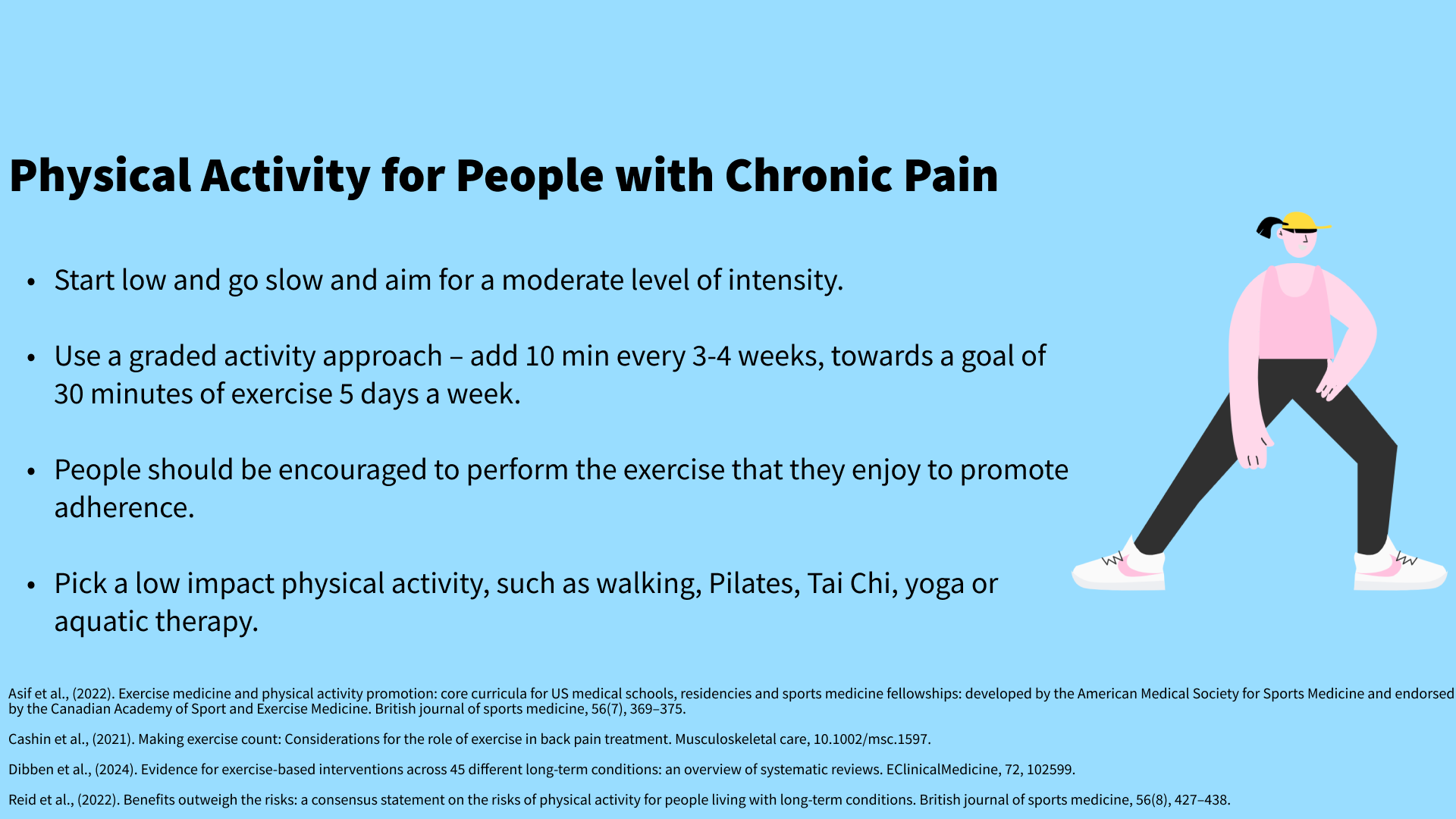
Regardless of age, exercise and physical activity (aerobic, resistance, flexibility, balance) can improve health and quality of life. People often prefer to participate in exercise programs that are designed with consideration of their preferences and past exercise experiences. With this in mind there are a range of exercise types that have shown to be effective for reducing pain and disability such as aerobic training, aquatic exercise, motor control exercises, Tai Chi, resistance training, walking, and yoga.
Ongoing Reevaluation
Clinical practice guidelines for osteoarthritis recommend an interdisciplinary approach with an emphasis on self-management, physical and psychological therapies, and less emphasis on pharmacological, intra-articular interventions and surgical treatments (Bowden et al., 2020; Kolasinski et al., 2020). It is not suggested that massage therapy alone can control symptoms but can be utilized to help relieve pain & reduce anxiety when integrated with standard care. Clinicians should work in partnership with patients to develop a person-centered care plan that considers best available evidence and the patient's goals, values, and preferences. If appropriate, start with multi-modal conservative care (education and reassurance, exercise, manual therapy, hydrotherapy, acupuncture, etc.) and reassess the person’s status at each visit for new or worsening symptoms, or satisfactory recovery. Then the patient is discharged, treatment is continued, or treatment is escalated based on response to the initial treatment plan, risk/benefit assessment and shared decision making.
Key Takeaways
In whole-person health, the human body is understood as a dynamic, living ecosystem rather than a collection of isolated parts. This paradigm shifts the clinical focus from simply treating isolated symptoms to evaluating how interconnected systems—biological, psychological, behavioral, and environmental—shape an individual’s health trajectory over time. Within this framework, massage therapy serves as a valuable component of an integrated, multidisciplinary care model. By complementing key lifestyle factors such as sleep quality, stress regulation, and physical activity, evidence-informed massage therapy supports both physical resilience and mental well-being.
Tailoring care to individual needs, goals, and assessment findings, massage therapists apply a range of evidence-informed clinical strategies:
Comprehensive Screening & Risk Stratification: Identifying red flags (underlying pathology requiring referral) and yellow flags (psychosocial factors influencing recovery).
Person-Centered Education & Reassurance: Utilizing empathetic communication, shared decision-making, and healthy coping strategies to build self-efficacy.
Targeted Manual Therapy: Employing soft-tissue techniques, neural mobilization, and joint mobilization to modulate pain and restore movement capacity.
Collaborative Self-Management: Empowering patients through remedial exercise (stretching, strengthening, and physical activity), sleep hygiene recommendations, hydrotherapy, and mindfulness-based interventions.
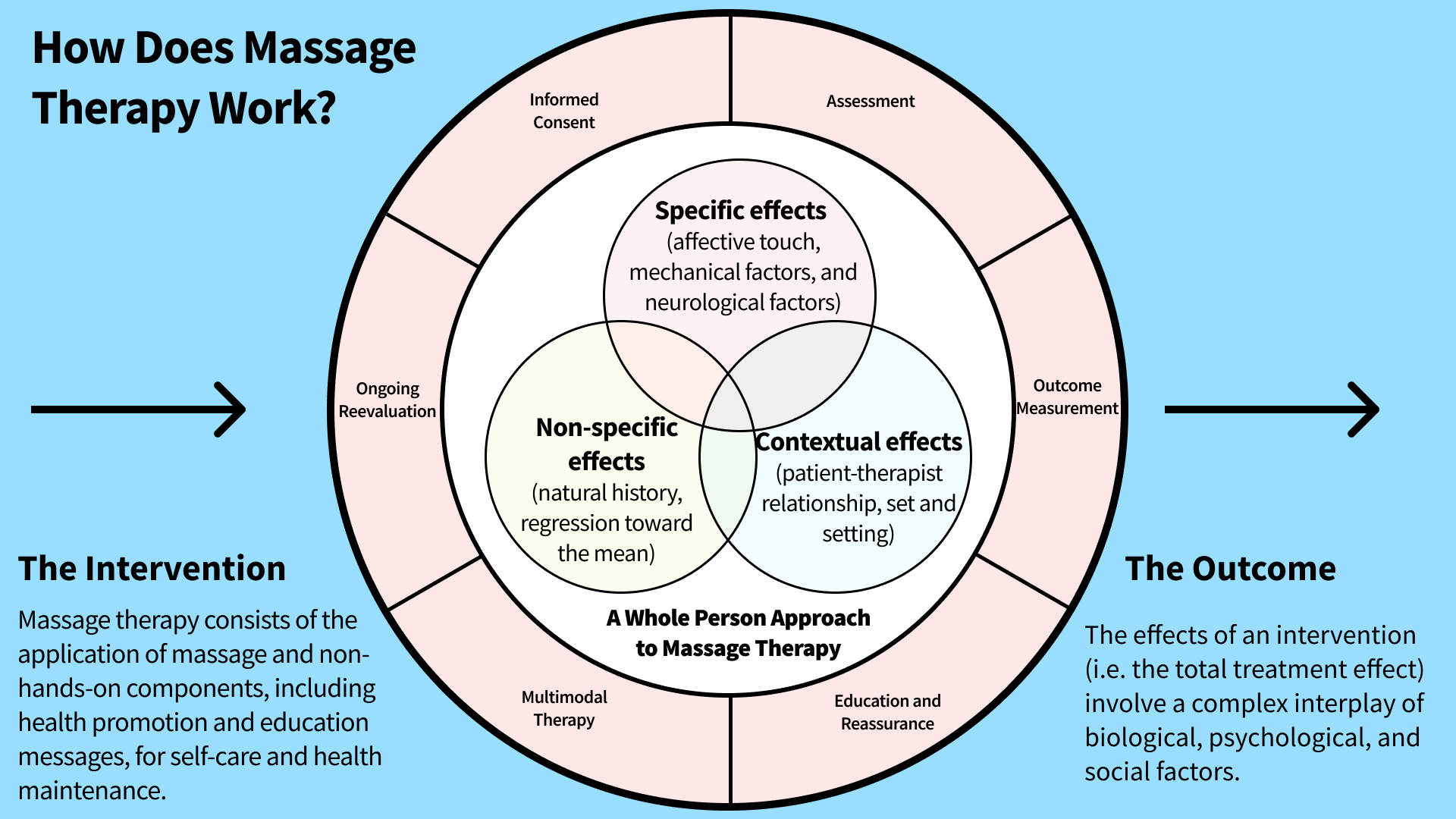
The available evidence suggests that the effects of massage Therapy cannot be explained by a single mechanism. Instead, it acts through a complex interplay of interconnected responses. This aligns with the concept of a "whole-person approach," which emphasizes the interconnectedness of biological, psychological, and social factors that contribute to our overall health and well-being.
References and Sources
With over 15 years of clinical experience and extensive study of massage therapy research, I'm committed to creating resources that foster the professional development of massage therapists globally. Whether you're a seasoned massage therapist or a curious newcomer, this massage therapy glossary is here to be your one-stop shop for understanding terms as it relates to massage therapy. Additionally this post highlights a substantial body of evidence supporting the use of massage therapy in alleviating pain and enhancing quality of life across a range of health issues.
This is a selection of sources I used to help formulate my ideas based on over-lapping concepts from massage therapy, physiotherapy, chiropractic, osteopathy, lifestyle medicine and traditional healing approaches.
Abdel Shaheed, C., Ferreira, G. E., Dmitritchenko, A., McLachlan, A. J., Day, R. O., Saragiotto, B., Lin, C., Langendyk, V., Stanaway, F., Latimer, J., Kamper, S., McLachlan, H., Ahedi, H., & Maher, C. G. (2021). The efficacy and safety of paracetamol for pain relief: an overview of systematic reviews. The Medical journal of Australia, 214(7), 324–331. https://doi.org/10.5694/mja2.50992
Abdel Shaheed, C., Awal, W., Zhang, G., Gilbert, S. E., Gallacher, D., McLachlan, A., Day, R. O., Ferreira, G. E., Jones, C. M., Ahedi, H., Tamrakar, M., Blyth, F. M., Stanaway, F., & Maher, C. G. (2022). Efficacy, safety, and dose-dependence of the analgesic effects of opioid therapy for people with osteoarthritis: systematic review and meta-analysis. The Medical journal of Australia, 216(6), 305–311. https://doi.org/10.5694/mja2.51392
Barroso, J., Branco, P., & Apkarian, A. V. (2025). The causal role of brain circuits in osteoarthritis pain. Nature reviews. Rheumatology, 21(5), 261–274. https://doi.org/10.1038/s41584-025-01234-9
Bennell, K. L., & Hunter, D. J. (2020). Physical Therapy before the Needle for Osteoarthritis of the Knee. The New England journal of medicine, 382(15), 1470–1471. https://doi.org/10.1056/NEJMe2000718
Bowden, J. L., Hunter, D. J., Deveza, L. A., Duong, V., Dziedzic, K. S., Allen, K. D., Chan, P. K., & Eyles, J. P. (2020). Core and adjunctive interventions for osteoarthritis: efficacy and models for implementation. Nature reviews. Rheumatology, 16(8), 434–447. https://doi.org/10.1038/s41584-020-0447-8
Bussières, A., Cancelliere, C., Ammendolia, C., Comer, C. M., Zoubi, F. A., Châtillon, C. E., Chernish, G., Cox, J. M., Gliedt, J. A., Haskett, D., Jensen, R. K., Marchand, A. A., Tomkins-Lane, C., O'Shaughnessy, J., Passmore, S., Schneider, M. J., Shipka, P., Stewart, G., Stuber, K., Yee, A., … Ornelas, J. (2021). Non-Surgical Interventions for Lumbar Spinal Stenosis Leading To Neurogenic Claudication: A Clinical Practice Guideline. The journal of pain, 22(9), 1015–1039. https://doi.org/10.1016/j.jpain.2021.03.147
Cashin, A. G., Furlong, B. M., Kamper, S. J., De Carvalho, D., Machado, L. A., Davidson, S. R., Bursey, K. K., Abdel Shaheed, C., & Hall, A. M. (2025). Analgesic effects of non-surgical and non-interventional treatments for low back pain: a systematic review and meta-analysis of placebo-controlled randomised trials. BMJ evidence-based medicine, bmjebm-2024-112974. Advance online publication. https://doi.org/10.1136/bmjebm-2024-112974
Cheema, H., Brophy, R., Collins, J., Cox, C. L., Guermazi, A., Kumara, M., Levy, B. A., MacFarlane, L., Mandl, L. A., Marx, R., Selzer, F., Spindler, K., Katz, J. N., & Murray, E. J. (2024). Causal relationships between pain, medical treatments, and knee osteoarthritis: A graphical causal model to guide analyses. Osteoarthritis and cartilage, 32(3), 319–328. https://doi.org/10.1016/j.joca.2023.10.007
Chen, W. X., Li, Y. Z., Kang, L. D., Jiang, X. F., Chen, Y. H., Yang, D., Wang, Y., Zhao, Y. G., Liu, F. H., Liu, J. X., Xing, W. Y., Zheng, W. R., Qin, Y., Li, Y., Chen, X. Y., Li, D. R., Xu, Y. L., Yang, R., Feng, Z. F., Wang, L., … Wu, Q. J. (2026). Efficacy and evidence certainty of traditional Chinese exercises for musculoskeletal disorders: an umbrella review of meta-analyses. British journal of sports medicine, bjsports-2026-111792. Advance online publication. https://doi.org/10.1136/bjsports-2026-111792
Collins, K. H., Haugen, I. K., Neogi, T., & Guilak, F. (2025). Osteoarthritis as a systemic disease. Nature reviews. Rheumatology, 10.1038/s41584-025-01332-8. Advance online publication. https://doi.org/10.1038/s41584-025-01332-8
Conley, B., Bunzli, S., Bullen, J., O'Brien, P., Persaud, J., Gunatillake, T., Dowsey, M. M., Choong, P. F. M., & Lin, I. (2023). Core Recommendations for Osteoarthritis Care: A Systematic Review of Clinical Practice Guidelines. Arthritis care & research, 75(9), 1897–1907. https://doi.org/10.1002/acr.25101
Culvenor, A. G., Øiestad, B. E., Hart, H. F., Stefanik, J. J., Guermazi, A., & Crossley, K. M. (2019). Prevalence of knee osteoarthritis features on magnetic resonance imaging in asymptomatic uninjured adults: a systematic review and meta-analysis. British journal of sports medicine, 53(20), 1268–1278. https://doi.org/10.1136/bjsports-2018-099257
da Costa, B. R., Pereira, T. V., Saadat, P., Rudnicki, M., Iskander, S. M., Bodmer, N. S., Bobos, P., Gao, L., Kiyomoto, H. D., Montezuma, T., Almeida, M. O., Cheng, P. S., Hincapié, C. A., Hari, R., Sutton, A. J., Tugwell, P., Hawker, G. A., & Jüni, P. (2021). Effectiveness and safety of non-steroidal anti-inflammatory drugs and opioid treatment for knee and hip osteoarthritis: network meta-analysis. BMJ (Clinical research ed.), 375, n2321. https://doi.org/10.1136/bmj.n2321
Darlow, B., Belton, J., Brown, M., Clark, J., Richards, D. P., Simick Behera, N., & Bunzli, S. (2025). Making sense of osteoarthritis: A narrative review. Osteoarthritis and cartilage, 33(1), 17–26. https://doi.org/10.1016/j.joca.2024.09.012
Daste, C., Kirren, Q., Akoum, J., Lefèvre-Colau, M. M., Rannou, F., & Nguyen, C. (2021). Physical activity for osteoarthritis: Efficiency and review of recommandations. Joint bone spine, 88(6), 105207. https://doi.org/10.1016/j.jbspin.2021.105207
Deyle, G. D., Allen, C. S., Allison, S. C., Gill, N. W., Hando, B. R., Petersen, E. J., Dusenberry, D. I., & Rhon, D. I. (2020). Physical Therapy versus Glucocorticoid Injection for Osteoarthritis of the Knee. The New England journal of medicine, 382(15), 1420–1429. https://doi.org/10.1056/NEJMoa1905877
Döding, R., Donath, L., Ehrenbrusthoff, K., Frangi, J., Schlaffke, L., Schmidt, H., Junker, F., Owen, P. J., Saueressig, T., Tagliaferri, S. D., Vickery, S., & Belavy, D. L. (2026). Relative differences of brain, sensory, psychological, motor, and tissue domains across musculoskeletal pain conditions: systematic review and multivariate meta-analyses. The journal of pain, 106395. Advance online publication. https://doi.org/10.1016/j.jpain.2026.106395
Duong, V., Shaheed, C. A., Ferreira, M. L., Narayan, S. W., Venkatesha, V., Hunter, D. J., Zhu, J., Atukorala, I., Kobayashi, S., Goh, S. L., Briggs, A. M., Cross, M., Espinosa-Morales, R., Fu, K., Guillemin, F., Keefe, F., Stefan Lohmander, L., March, L., Milne, G. J., Mei, Y., … Cooper, C. (2025). Risk factors for the development of knee osteoarthritis across the lifespan: a systematic review and meta-analysis. Osteoarthritis and cartilage, S1063-4584(25)00860-X. Advance online publication. https://doi.org/10.1016/j.joca.2025.03.003
Englund, M. (2023). Osteoarthritis, part of life or a curable disease? A bird's-eye view. Journal of internal medicine, 293(6), 681–693. https://doi.org/10.1111/joim.13634
Gibbs, A. J., Gray, B., Wallis, J. A., Taylor, N. F., Kemp, J. L., Hunter, D. J., & Barton, C. J. (2023). Recommendations for the management of hip and knee osteoarthritis: A systematic review of clinical practice guidelines. Osteoarthritis and cartilage, 31(10), 1280–1292. https://doi.org/10.1016/j.joca.2023.05.015
Guermazi, A., Hunter, D. J., & Kloppenburg, M. (2023). Debate: Intra-articular steroid injections for osteoarthritis - harmful or helpful?. Osteoarthritis imaging, 3(3), 100163. https://doi.org/10.1016/j.ostima.2023.100163
Hamasaki, T., Laprise, S., Harris, P. G., Bureau, N. J., Gaudreault, N., Ziegler, D., & Choinière, M. (2020). Efficacy of Nonsurgical Interventions for Trapeziometacarpal (Thumb Base) Osteoarthritis: A Systematic Review. Arthritis care & research, 72(12), 1719–1735. https://doi.org/10.1002/acr.24084
Han, S., Li, T., Cao, Y., Li, Z., Mai, Y., Fan, T., Zeng, M., Wen, X., Han, W., Lin, L., Zhu, L., Fu, S. N., Bennell, K. L., Hunter, D. J., Ding, C., Li, L., & Zhu, Z. (2024). Quantitative analysis of effectiveness and associated factors of exercise on symptoms in osteoarthritis: a pharmacodynamic model-based meta-analysis. British journal of sports medicine, 58(24), 1539–1550. https://doi.org/10.1136/bjsports-2023-107625
Hartvigsen, J., Kamper, S. J., & French, S. D. (2022). Low-value care in musculoskeletal health care: Is there a way forward?. Pain practice: the official journal of World Institute of Pain, 22 Suppl 2, 65–70. https://doi.org/10.1111/papr.13142
Herrero-Beaumont, G., Castro-Dominguez, F., Migliore, A., Naredo, E., Largo, R., & Reginster, J. Y. (2024). Systemic osteoarthritis: the difficulty of categorically naming a continuous condition. Aging clinical and experimental research, 36(1), 45. https://doi.org/10.1007/s40520-024-02714-w
Jinich-Diamant, A., Albinni, B., Fishbein, J. N., Jacobson, E., Abraira, V. E., Hong, S., Korgan, A. C., Mazzieri, A. M., & Case, L. (2026). MASSAG model: Towards an integrative neuroscience framework linking emotional trauma, pain, and mechanisms of force-based manipulations. Neuroscience and biobehavioral reviews, 181, 106517. https://doi.org/10.1016/j.neubiorev.2025.106517
Keter, D. L., Bialosky, J. E., Brochetti, K., Courtney, C. A., Funabashi, M., Karas, S., Learman, K., & Cook, C. E. (2025). The mechanisms of manual therapy: A living review of systematic, narrative, and scoping reviews. PloS one, 20(3), e0319586. https://doi.org/10.1371/journal.pone.0319586
Kloppenburg, M., Namane, M., & Cicuttini, F. (2025). Osteoarthritis. Lancet (London, England), 405(10472), 71–85. https://doi.org/10.1016/S0140-6736(24)02322-5
Koc, T. A., Jr, Cibulka, M., Enseki, K. R., Gentile, J. T., MacDonald, C. W., Kollmorgen, R. C., & Martin, R. L. (2025). Hip Pain and Mobility Deficits-Hip Osteoarthritis: Revision 2025. The Journal of orthopaedic and sports physical therapy, 55(11), CPG1–CPG31. https://doi.org/10.2519/jospt.2025.0301
Kolasinski, S. L., Neogi, T., Hochberg, M. C., Oatis, C., Guyatt, G., Block, J., … Reston, J. (2020). 2019 American College of Rheumatology/Arthritis Foundation Guideline for the Management of Osteoarthritis of the Hand, Hip, and Knee. Arthritis & rheumatology (Hoboken, N.J.), 72(2), 220–233. https://doi.org/10.1002/art.41142
Kongsted, A., Kent, P., Quicke, J. G., Skou, S. T., & Hill, J. C. (2020). Risk-stratified and stepped models of care for back pain and osteoarthritis: are we heading towards a common model?. Pain reports, 5(5), e843. https://doi.org/10.1097/PR9.0000000000000843
Kraus, V. B., Sprow, K., Powell, K. E., Buchner, D., Bloodgood, B., Piercy, K., George, S. M., Kraus, W. E., & 2018 PHYSICAL ACTIVITY GUIDELINES ADVISORY COMMITTEE* (2019). Effects of Physical Activity in Knee and Hip Osteoarthritis: A Systematic Umbrella Review. Medicine and science in sports and exercise, 51(6), 1324–1339. https://doi.org/10.1249/MSS.0000000000001944
Langevin, H. M., Weber, W., & Chen, W. (2024). Integrated multicomponent interventions to support healthy aging of the whole person. Aging cell, 23(1), e14001. https://doi.org/10.1111/acel.14001
Langevin, H. M. (2024). Health and Well-Being: Distinct and Intertwined Concepts. Medical care, 62(12 Suppl 1), S13–S14. https://doi.org/10.1097/MLR.0000000000002061
Lebert, R., Noy, M., Purves, E., & Tibbett, J. (2022). Massage Therapy: A Person-Centred Approach to Chronic Pain. International journal of therapeutic massage & bodywork, 15(3), 27–34. https://doi.org/10.3822/ijtmb.v15i3.713
Long, H., Liu, Q., Yin, H., Wang, K., Diao, N., Zhang, Y., Lin, J., & Guo, A. (2022). Prevalence Trends of Site-Specific Osteoarthritis From 1990 to 2019: Findings From the Global Burden of Disease Study 2019. Arthritis & rheumatology (Hoboken, N.J.), 74(7), 1172–1183. https://doi.org/10.1002/art.42089
Martin, S., Smith, M., Wilson, D. A., Zadro, J. R., Ferreira, G. E., & O'Keeffe, M. (2025). Non-specific diagnostic labels for musculoskeletal conditions foster positive views about prognosis and non-invasive management but require clear explanation: a systematic review. Journal of physiotherapy, 71(3), 167–178. https://doi.org/10.1016/j.jphys.2025.06.011
Mazzei, D. R., Whittaker, J. L., Faris, P., Wasylak, T., & Marshall, D. A. (2024). Estimating the Budget Impact and Joint Replacement Avoidance by Implementing a Standardized Education and Exercise Therapy Program for Hip and Knee Osteoarthritis in a Publicly Insured Healthcare System. Arthritis care & research, 10.1002/acr.25492. Advance online publication. https://doi.org/10.1002/acr.25492
Mi, H., Oh, C., & Towheed, T. (2023). Systematic Review of Non-surgical Therapies for Osteoarthritis of the Hand: An Update. European journal of rheumatology, 11(Suppl 1), S53–S67. Advance online publication. https://doi.org/10.5152/eurjrheum.2023.21197
Nemati, D., Kaushal, N., Keith, N., & Munk, N. (2026). Applying the health belief model to understand the usage and experience of self-management techniques in knee osteoarthritis: A mixed-methods observational study. International journal of nursing studies advances, 10, 100534. https://doi.org/10.1016/j.ijnsa.2026.100534
Packheiser, J., Hartmann, H., Fredriksen, K., Gazzola, V., Keysers, C., & Michon, F. (2024). A systematic review and multivariate meta-analysis of the physical and mental health benefits of touch interventions. Nature human behaviour, 8(6), 1088–1107. https://doi.org/10.1038/s41562-024-01841-8
Pereira, T. V., Saadat, P., Bobos, P., Iskander, S. M., Bodmer, N. S., Rudnicki, M., Dan Kiyomoto, H., Montezuma, T., Almeida, M. O., Bansal, R., Cheng, P. S., Busse, J. W., Sutton, A. J., Tugwell, P., Hawker, G. A., Jüni, P., & da Costa, B. R. (2025). Effectiveness and safety of intra-articular interventions for knee and hip osteoarthritis based on large randomized trials: A systematic review and network meta-analysis. Osteoarthritis and cartilage, 33(2), 207–217. https://doi.org/10.1016/j.joca.2024.08.014
Perlman, A., Fogerite, S. G., Glass, O., Bechard, E., Ali, A., Njike, V. Y., Pieper, C., Dmitrieva, N. O., Luciano, A., Rosenberger, L., Keever, T., Milak, C., Finkelstein, E. A., Mahon, G., Campanile, G., Cotter, A., & Katz, D. L. (2019). Efficacy and Safety of Massage for Osteoarthritis of the Knee: a Randomized Clinical Trial. Journal of general internal medicine, 34(3), 379–386. https://doi.org/10.1007/s11606-018-4763-5
Petersen, K. K., Ciampi de Andrade, D., Pickering, G., Giordano, R., Hertel, E., Edwards, R. R., Pogatzki-Zahn, E., Mobasheri, A., & Arendt-Nielsen, L. (2026). The complexity of pain in osteoarthritis. Nature reviews. Rheumatology, 10.1038/s41584-026-01372-8. Advance online publication. https://doi.org/10.1038/s41584-026-01372-8
Poulsen, E., Goncalves, G. H., Bricca, A., Roos, E. M., Thorlund, J. B., & Juhl, C. B. (2019). Knee osteoarthritis risk is increased 4-6 fold after knee injury - a systematic review and meta-analysis. British journal of sports medicine, 53(23), 1454–1463. https://doi.org/10.1136/bjsports-2018-100022
Rausch Osthoff, A. K., Vlieland, T. P. M. V., Ferreira, R. J. O., Amarnani, R., Battista, S., Orlinov, D., Boyadzhieva, V., Brodin, N., Cox, A., Davergne, T., Duruöz, T., Esbensen, B. A., Fongen, C., Günther, K. P., Henrotin, Y., Juhl, C., Kennedy, N., Kiltz, U., Knittle, K., Metsios, G., … Niedermann, K. (2026). EULAR recommendations for physical activity in people with inflammatory arthritis and osteoarthritis: 2025 update. Annals of the rheumatic diseases, 85(6), 1026–1038. https://doi.org/10.1016/j.ard.2026.03.006
Schleimer, T., Teichert, F., Henriksen, M., Doeding, R., Innocenti, T., Brisby, H., Klotz, M. C., Korinth, M., Owen, P. J., Pieper, D., & Belavy, D. L. (2026). Effectiveness of exercise therapy for osteoarthritis: an overview of systematic reviews and randomised controlled trials. RMD open, 12(1), e006275. https://doi.org/10.1136/rmdopen-2025-006275
Shepherd, M. H., McDevitt, A., Keter, D., Albers, N., Clewley, D., & Cook, C. (2025). The person-centered hypothesis framework: Advancing clinical reasoning in musculoskeletal pain management. Musculoskeletal science & practice, 80, 103395. Advance online publication. https://doi.org/10.1016/j.msksp.2025.103395
Wang, Y., & Hui, K. K. (2026). Moving beyond disease-centered care toward whole-person health. Integrative medicine research, 15(3Part B), 101361. https://doi.org/10.1016/j.imr.2026.101361
Zhu, B., Ba, H., Kong, L., Fu, Y., Ren, J., Zhu, Q., & Fang, M. (2024). The effects of manual therapy in pain and safety of patients with knee osteoarthritis: a systematic review and meta-analysis. Systematic reviews, 13(1), 91. https://doi.org/10.1186/s13643-024-02467-7