A Look at Prominent Theories of Consciousness
/A Look at Prominent Theories of Consciousness
Understanding the nature of consciousness can provide insights into conscious experiences such as pain, mood, placebo effects, fatigue, affect, and emotion.
Consciousness—the subjective experience of awareness—has captivated thinkers for centuries. What does it actually mean to be aware? How do physical processes within our brains create the rich tapestry of our inner worlds?
While a single, universally accepted definition remains elusive, consciousness generally refers to the state of being aware of oneself. Scientists and philosophers continue to grapple with what David Chalmers famously termed the "hard problem" of consciousness: how do physical brain processes generate subjective experiences? This isn't a question of how the brain processes information, but rather how those processes feel like something.
Understanding the nature of consciousness can provide insights into conscious experiences such as pain, mood, placebo effects, fatigue, affect, and emotion. These insights may, in turn, be used to better explain many concepts related to health and well-being.
Though a unified framework is still on the horizon, numerous theories offer compelling, albeit different, perspectives. Let’s take a look at five prominent ideas that attempt to shed light on this profound mystery.
Five Leading Theories of Consciousness
Global Neuronal Workspace Theory (GNWT): Picture your brain as a grand theater. In this analogy, various groups of neurons act as specialized performers on stage, while consciousness acts as a spotlight. This spotlight illuminates a specific group of "actors," bringing their performance to the forefront of attention. The "spotlight" represents the global workspace—a neural network connecting disparate brain regions that enables them to share information. When information is broadcast throughout this global workspace, it enters our conscious awareness.
Higher-Order Theories (HOT): These theories propose that consciousness involves more than just having an experience; it requires being aware of having that experience. It represents the difference between simply feeling happy and knowing that you are feeling happy. This self-awareness is thought to arise from higher-order representations—essentially, mental representations of our own mental states.
Integrated Information Theory (IIT): IIT suggests that consciousness is intrinsically linked to the quantity of "integrated information" a system possesses. A system with a high degree of integrated information features deeply interconnected parts that mutually influence one another. According to this theory, the greater the integrated information, the more conscious the system. This opens the intriguing possibility that consciousness isn't exclusive to brains but might also exist in other complex, interconnected systems.
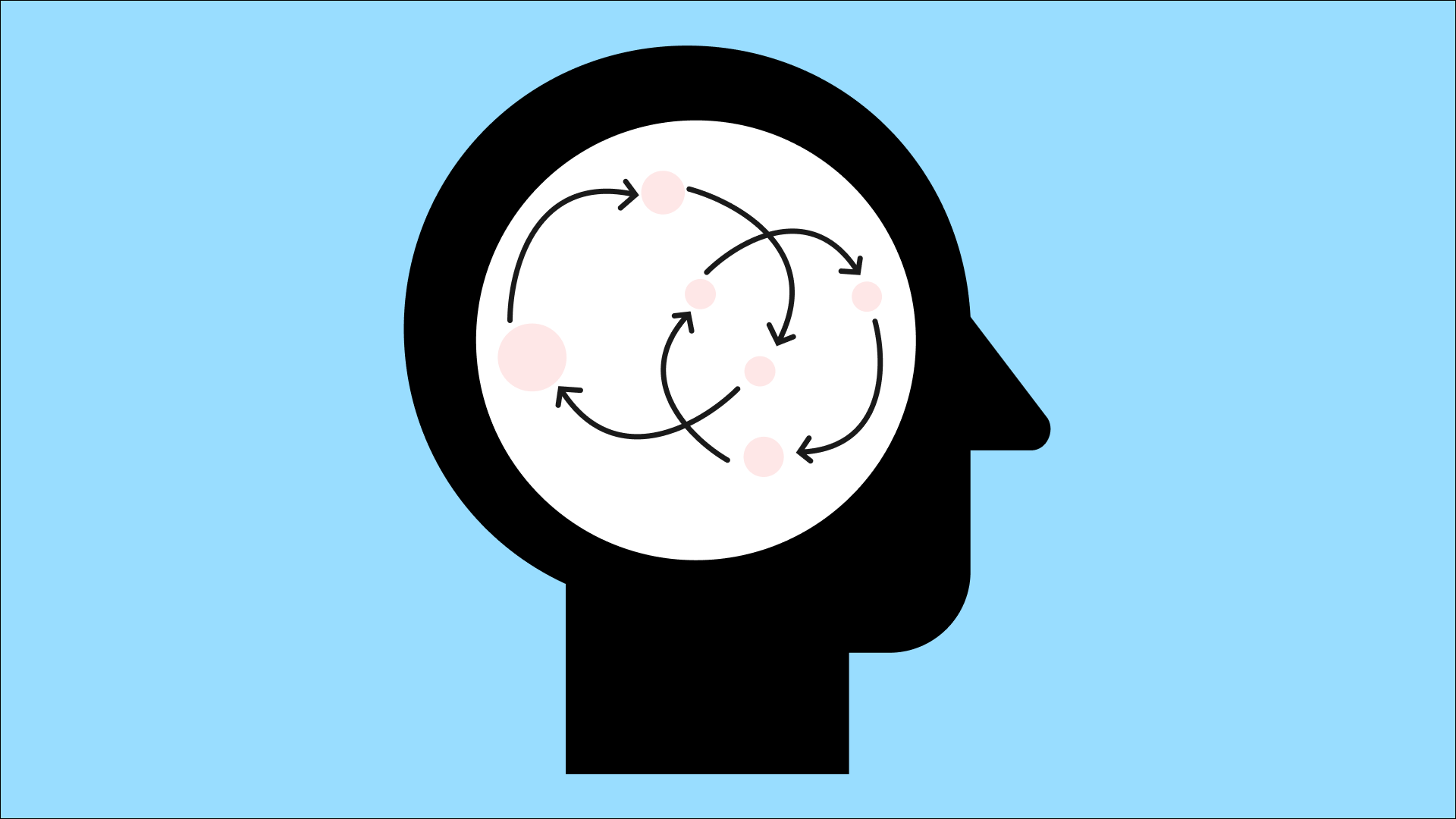
Recurrent Processing Theory (RPT): This theory highlights the critical role of feedback loops. It posits that consciousness emerges from continuous, recurrent information processing between different brain areas. This means information isn't merely processed in a straightforward, linear fashion; it is fed back to earlier stages for further refinement. These feedback mechanisms allow the brain to integrate and interpret information—a process considered crucial for conscious experience.
Predictive Processing (PP): This framework views the brain as a sophisticated prediction machine, constantly striving to anticipate what will happen next. It achieves this by constructing internal models of the world and continually updating them based on incoming sensory data. In this view, consciousness arises from the discrepancies—or "prediction errors"—between the brain’s forecasts and actual sensory input. When a mismatch occurs, the brain directs its attention to resolve the discrepancy. This ongoing cycle of prediction and error correction is thought to form the bedrock of conscious experience.
The Journey Continues
These five theories represent just a fraction of the ongoing efforts to explain consciousness. Each perspective comes with its own set of strengths and limitations, and none currently enjoys universal acceptance within the scientific community. Nevertheless, they all provide invaluable insights into the multifaceted nature of consciousness and offer potential pathways to understanding how it emerges from the intricate workings of the brain. The quest to fully understand consciousness continues, promising deeper insights into our minds and experiences.
References
Da Costa, L., Seth, A. K., Friston, K., Ramstead, M. J. D., & Sandved-Smith, L. (2026). A Rosetta Stone hypothesis for neurophenomenology: mathematical predictions from predictive processing. Neuroscience of consciousness, 2026(1), niag026. https://doi.org/10.1093/nc/niag026
Kuhn, R. L. (2024). A landscape of consciousness: Toward a taxonomy of explanations and implications. Progress in Biophysics and Molecular Biology, 190, 28–169. https://doi.org/10.1016/j.pbiomolbio.2023.12.003
Laukkonen, R., Friston, K., & Chandaria, S. (2025). A beautiful loop: An active inference theory of consciousness. Neuroscience and Biobehavioral Reviews, 176, 106296. https://doi.org/10.1016/j.neubiorev.2025.106296
Mudrik, L., Boly, M., Dehaene, S., Fleming, S. M., Lamme, V., Seth, A., & Melloni, L. (2025). Unpacking the complexities of consciousness: Theories and reflections. Neuroscience and Biobehavioral Reviews, 170, 106053. https://doi.org/10.1016/j.neubiorev.2025.106053
Murray, C. H., Dzirasa, K., Sawyer, D., Waconda-Lewis, K., Pollack, L., & Muglia, L. J. (2026). Illuminating consciousness. Frontiers in psychology, 17, 1751131. https://doi.org/10.3389/fpsyg.2026.1751131
Storm, J. F., Klink, P. C., Aru, J., Senn, W., Goebel, R., Pigorini, A., Avanzini, P., Vanduffel, W., Roelfsema, P. R., Massimini, M., Larkum, M. E., & Pennartz, C. M. A. (2024). An integrative, multiscale view on neural theories of consciousness. Neuron, 112(10), 1531–1552. https://doi.org/10.1016/j.neuron.2024.02.004
Theriault, J. E., Katsumi, Y., Reimann, H. M., Zhang, J., Deming, P., Dickerson, B. C., Quigley, K. S., & Barrett, L. F. (2025). It's not the thought that counts: Allostasis at the core of brain function. Neuron, 113(24), 4107–4133. https://doi.org/10.1016/j.neuron.2025.09.028
Whyte, C. J., Corcoran, A. W., Robinson, J., Smith, R., Moran, R. J., Parr, T., Friston, K. J., Seth, A. K., & Hohwy, J. (2026). On the minimal theory of consciousness implicit in active inference. Physics of life reviews, 56, 4–28. https://doi.org/10.1016/j.plrev.2025.11.002
Recommended Books for More in Depth Reading
Waking, Dreaming, Being: Self and Consciousness in Neuroscience, Meditation, and Philosophy by Evan Thompson (2014)
The Embodied Mind: Cognitive Science and Human Experience by Francisco Varela, Evan Thompson, and Eleanor Rosch (1991)
The Astonishing Hypothesis by Francis Crick (1994)
Consciousness Explained by Daniel Dennett (1991)
The Conscious Mind: In Search of a Fundamental Theory by David Chalmers (1996)
Being You: A New Science of Consciousness by Anil Seth (2021)
The Strange Order of Things: Life, Feeling, and the Making of Culture by Antonio Damasio (2018)
Natural Intelligence & the Logic of Consciousness. Antonio Damasio (2026)